
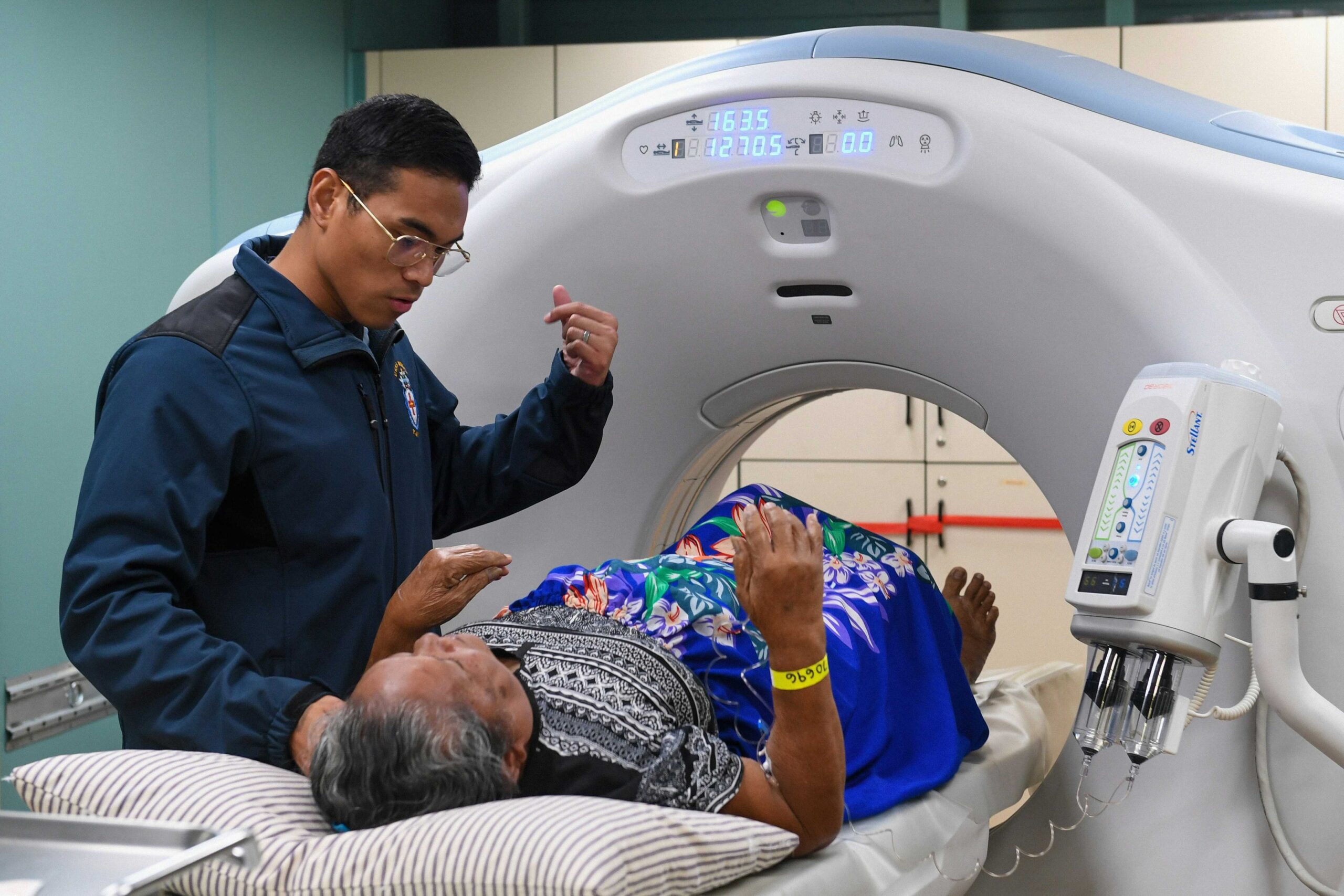
A new CT scanner can run well into seven figures. For many hospitals, imaging centers, and oncology practices, a well-chosen used or refurbished CT scanner delivers the same clinical capability at a fraction of the cost — if you buy the right system and plan for service from the start. This guide covers what actually matters when evaluating a pre-owned CT scanner, and where the deals go wrong.
New vs. Refurbished vs. Used CT Scanners
“Used” and “refurbished” are not the same thing, and the difference affects both price and risk.
- Used (as-is): sold in its current condition, often de-installed and sold quickly. Lowest price, highest risk — you inherit whatever condition the tube and detectors are in.
- Refurbished: inspected, tested, repaired as needed, and typically reconditioned to a defined standard, often with a warranty. Higher price than as-is, far lower risk.
- New: OEM-current, full warranty, highest cost, longest lead time.
For most facilities replacing aging equipment or adding capacity, a refurbished CT scanner from a reputable source is the sweet spot. The key is knowing what “refurbished” actually includes.
What to Check Before Buying a Used CT Scanner
Price is the last thing to evaluate, not the first. Before you compare quotes, confirm:
- CT tube condition and scan-second count. The X-ray tube is the single most expensive wear component in a CT scanner. Ask for the current tube’s usage (scan seconds or exposures) and remaining expected life. A cheap scanner with a nearly-dead tube is not cheap — a replacement CT tube can cost as much as the system.
- Slice count and detector configuration. 16-slice, 64-slice, 128-slice — match the slice count to your clinical mix (routine diagnostic vs. cardiac vs. treatment planning). Detector rows drive both capability and price.
- Software version and licensed options. Confirm which clinical applications are licensed and whether they transfer with the sale. Unlicensed software can be an expensive surprise.
- Service history and de-installation quality. A system professionally de-installed by trained engineers is worth more than one yanked out under time pressure. Rushed removal damages components.
- Parts availability and support horizon. How long will parts and service be realistically available for this model? End-of-life platforms can be excellent value — if you line up an independent service partner up front.
- Site and room readiness. Power, cooling, shielding, floor loading, and network requirements. A great scanner that doesn’t fit your room is a problem you pay for twice.
- Warranty and post-sale support. What’s covered, for how long, and who responds when it goes down?
Popular Refurbished CT Scanner Models
Systems like the GE Revolution CT and other established platforms are popular on the refurbished market precisely because parts and trained engineers are widely available. When a model has a large installed base, you get better parts pricing, faster service response, and a longer realistic support horizon. Match the platform to your clinical needs, budget, and — critically — long-term serviceability, not just the sticker price.
Plan for Service and Installation Before You Buy
The most common mistake facilities make is treating the scanner purchase, the installation, and the ongoing service as three separate decisions from three separate vendors. That’s where refurbished-equipment projects go wrong — seams between vendors become finger-pointing when something doesn’t work on day one.
Plan all three together: confirm parts availability for the model, budget for professional installation and room prep before you sign, and line up a service plan that fits the platform. 43 Oncology helps facilities evaluate refurbished CT scanners, coordinate installation and de-installation, and provides ongoing CT service, CT tube replacement, and parts support — so the system that looks good on paper actually performs in your room.
Get Help Evaluating a Used CT Scanner
Considering a used or refurbished CT scanner? Before you commit, talk through tube condition, slice count, software, service history, and installation requirements with engineers who service these systems in the field.
Call 43 Oncology at (844) 434-3662 for help evaluating a refurbished CT scanner or sourcing the right system for your facility.
How much does a used CT scanner cost?
Pricing varies widely by slice count, tube condition, software, and refurbishment level — from low five figures for an older as-is unit to several hundred thousand for a late-model refurbished system. Tube condition is the biggest single price driver.
What’s the difference between a used and a refurbished CT scanner?
A used system is sold as-is in its current condition; a refurbished system has been inspected, tested, repaired, and reconditioned to a defined standard, usually with a warranty.
How long does a CT tube last?
It depends on the tube type and usage measured in scan seconds. Always ask for the current tube’s usage and remaining life before buying — a replacement tube is one of the most expensive CT components.
Can you install and service a refurbished CT scanner?
Yes — 43 Oncology coordinates installation, de-installation, CT tube replacement, parts, and ongoing service nationwide.
Which refurbished CT scanner should I buy?
The right system matches your clinical mix (slice count), room readiness, budget, and long-term parts/service availability — not just the lowest price. We help facilities evaluate the tradeoffs.
Leave a Reply