
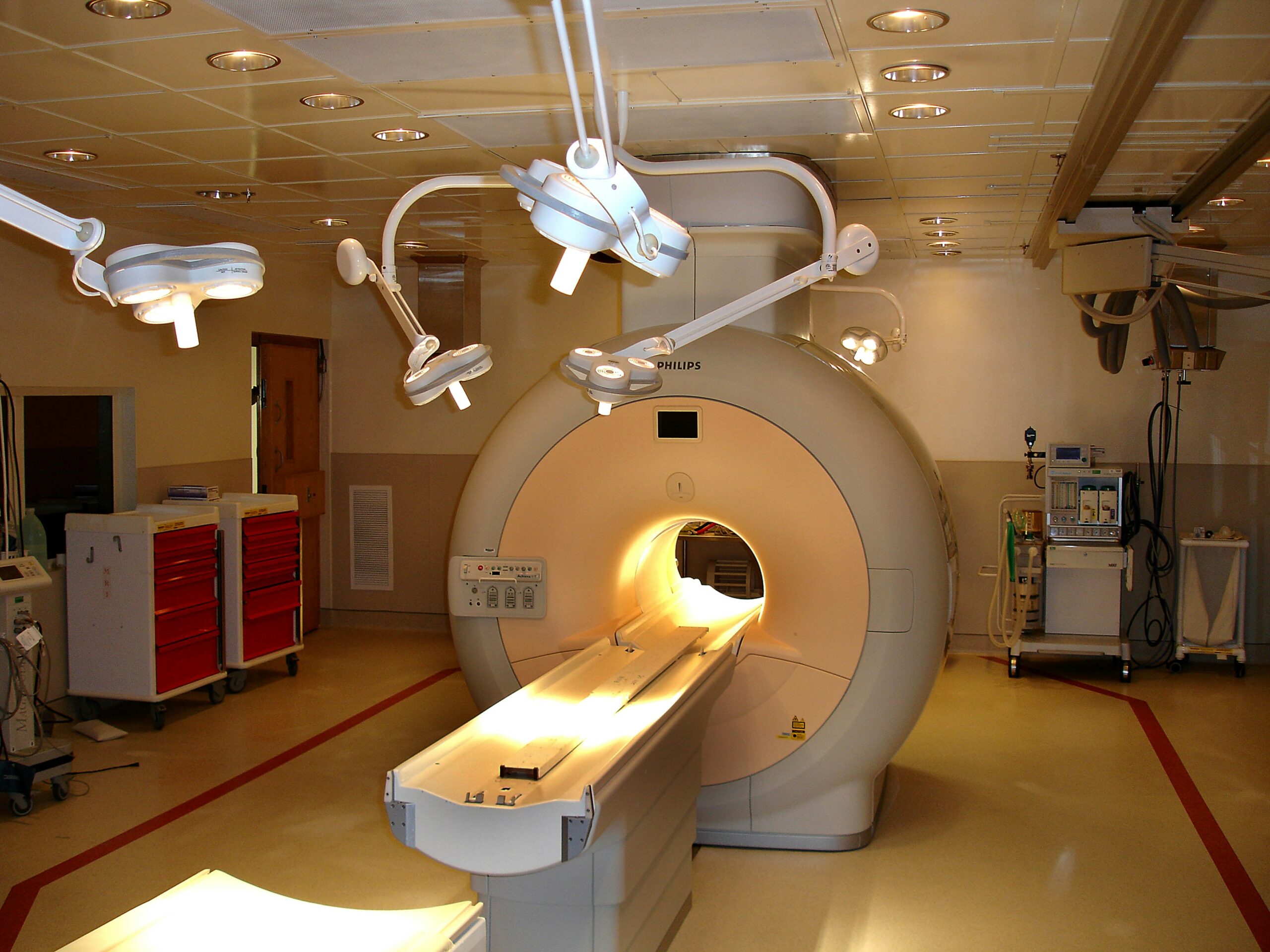
An MRI system is one of the largest capital purchases a facility makes — and one of the most complex to buy used. A carefully selected refurbished MRI machine can expand your service lines or replace aging equipment at well below new-system cost, but MRI carries siting, magnet, and service considerations that don’t apply to other imaging equipment. This guide covers what actually matters when buying a used or refurbished MRI.
Why Buy a Refurbished MRI?
New MRI systems are expensive and carry long lead times. For many hospitals, imaging centers, and outpatient facilities, a refurbished 1.5T or 3T system delivers the clinical capability they need at a fraction of the cost. Refurbished MRI is a practical way to add capacity, replace an aging magnet, or launch a new service line while managing capital budgets — provided the system is evaluated on more than price.
1.5T vs. 3T — Match Field Strength to Your Clinical Mix
The magnet’s field strength drives both capability and cost:
- 1.5T — the workhorse of general imaging. Broad clinical coverage, excellent parts and service availability, lower siting and helium costs. The right choice for most general diagnostic work.
- 3T — higher signal-to-noise for neuro, musculoskeletal, and research applications. Higher purchase, siting, and operating costs.
Buy the field strength your exam mix actually requires, not the highest number available.
What to Check Before Buying a Used MRI
MRI has failure points that don’t exist on other imaging equipment. Before you buy, confirm:
- Magnet condition and helium/cryogen status. The magnet is the heart of the system. Understand its condition, cold-head and cryogen state, and whether it will be shipped ramped-down or with the magnet energized — this significantly affects transport and re-installation cost.
- Gradient and coil package. Which coils are included and licensed? A missing or unlicensed coil package limits what you can scan and is expensive to add later.
- Software version and licensed applications. Confirm the software level and which clinical applications transfer with the sale.
- Siting requirements. RF shielding, magnetic shielding, chiller and cooling, floor loading, and quench-pipe routing. MRI siting is a project in itself — budget for it before you sign.
- Service history and de-installation quality. MRI de-installation is specialized work. A professionally handled magnet is worth far more than one removed under time pressure.
- Parts and service horizon. Confirm realistic long-term parts and service availability for the platform, and line up a service partner before go-live.
Plan Siting, Installation, and Service Before You Buy
The costliest MRI mistakes happen when the purchase, the siting/installation, and the ongoing service are treated as three separate decisions. MRI especially punishes this — a magnet that doesn’t fit the room, a chiller that isn’t sized, or shielding that isn’t planned turns a good deal into a stalled project.
Plan all three together. 43 Oncology helps facilities evaluate refurbished MRI systems, understand siting and installation requirements, coordinate de-installation and relocation, and arrange ongoing MRI service and parts support — so the system performs from day one.
Get Help Evaluating a Refurbished MRI
Considering a used or refurbished MRI? Before you commit, talk through magnet condition, field strength, coils, software, and siting with people who understand the modality’s complexity.
Call 43 Oncology at (844) 434-3662 for help evaluating a refurbished MRI system or planning an installation.
How much does a used MRI machine cost?
Pricing depends heavily on field strength (1.5T vs 3T), magnet condition, coil package, software, and refurbishment level — ranging from low-to-mid six figures for a refurbished 1.5T to substantially more for a late-model 3T. Siting and installation are additional.
What’s the difference between a used and a refurbished MRI?
A used MRI is sold as-is; a refurbished MRI has been inspected, tested, reconditioned, and typically warrantied to a defined standard.
Should I buy a 1.5T or 3T MRI?
1.5T covers most general diagnostic imaging with lower siting and operating costs; 3T suits neuro, MSK, and research work that benefits from higher signal-to-noise. Match field strength to your exam mix.
What’s involved in siting a refurbished MRI?
RF and magnetic shielding, chiller/cooling, floor loading, and quench-pipe routing. Siting should be planned and budgeted before purchase.
Can you install and service a refurbished MRI? Yes — 43 Oncology helps evaluate systems and coordinates siting, installation, de-installation, relocation, parts, and ongoing service nationwide.
Leave a Reply